

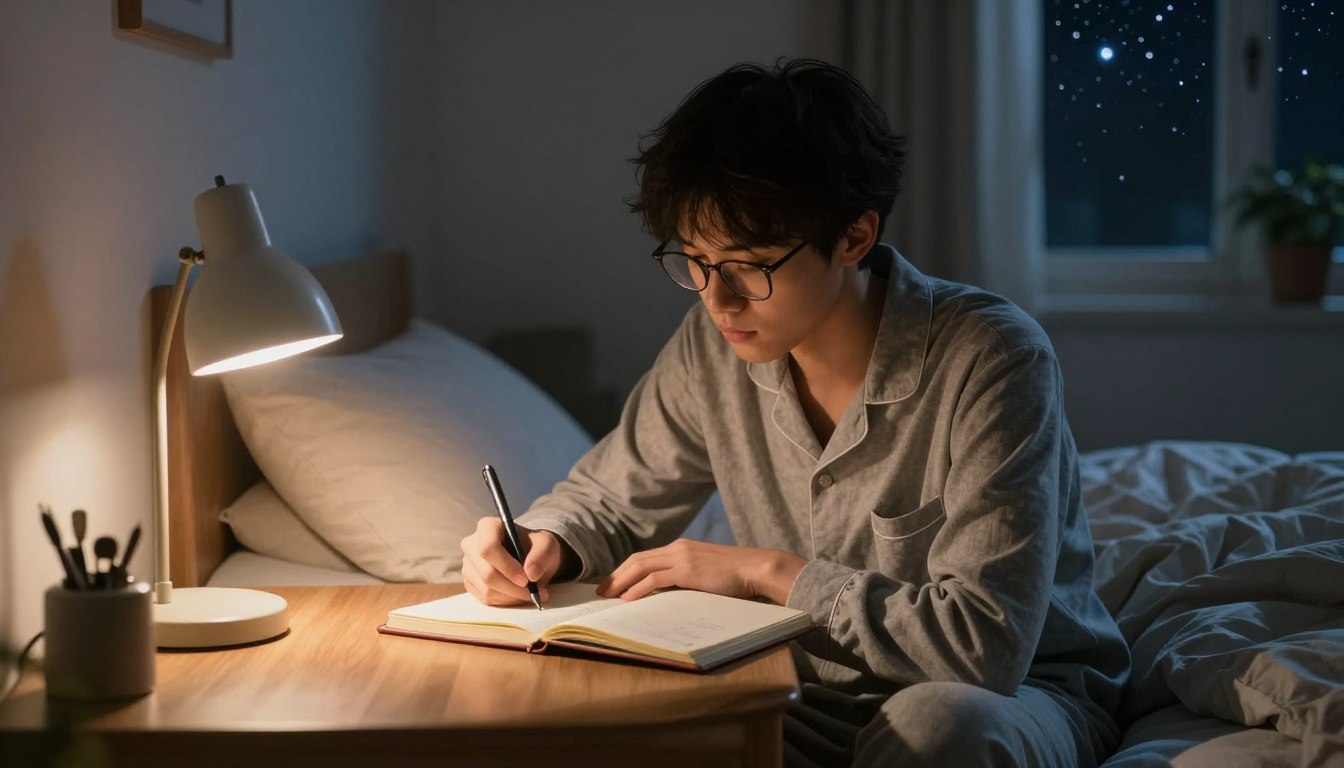
Have you ever woken up with fragments of amazing nocturnal adventures fading from memory? We’re here to help you capture those fleeting moments. This guide introduces a powerful practice for preserving your sleep-time experiences.
Remembering your nighttime visions matters more than you might think. These experiences offer valuable emotional insights and creative inspiration. By developing a consistent approach, you can transform vague memories into detailed records worth exploring.
Whether you recall your sleep stories vividly or barely at all, this method adapts to your unique patterns. We’ll walk you through practical tools and proven techniques. The journey requires some patience, but the rewards of enhanced self-awareness make it truly worthwhile.
Key Takeaways
- Capturing your nocturnal experiences can unlock valuable personal insights
- Consistent practice dramatically improves your ability to remember sleep-time visions
- This approach works for everyone, regardless of current recall ability
- You’ll discover practical tools that fit seamlessly into daily life
- The process requires patience but offers significant creative and emotional benefits
- Personalized techniques ensure the method works with your unique sleep patterns
- Transforming fleeting memories into tangible records creates opportunities for deeper exploration
Introduction: Setting the Stage for Dream Exploration
During your nightly rest, a fascinating realm of mental activity plays out, often leaving only traces behind. Each night, you spend roughly two hours in this state, whether you recall the details or not. This represents a significant portion of your existence that deserves your attention.
Throughout history, cultures worldwide have valued these nocturnal experiences. From ancient civilizations to modern traditions, people have recognized dreams as meaningful encounters. They offer insights that can influence our waking hours in surprising ways.
Exploring this aspect of life isn’t just about interpretation. It’s about developing a relationship with a unique part of your experience. This realm operates outside your usual conscious constraints, offering fresh perspectives.
| Benefit Type | Daily Impact | Long-Term Value |
|---|---|---|
| Emotional Awareness | Better mood regulation | Improved self-understanding |
| Creative Inspiration | Fresh problem-solving approaches | Enhanced innovation skills |
| Personal Insight | Clarified daily decisions | Deeper life perspective |
Some dismiss these experiences as random nonsense, but we encourage curiosity. Allow the process itself to reveal what dreams might offer you personally. The practice requires no special equipment, making it accessible to everyone.
By paying attention to this often-overlooked aspect of existence, you open doors to valuable self-discovery. The journey begins with simple observation and grows from there.
Embracing the Mystery of Dreams
Science took a major leap in understanding our nighttime experiences when researchers discovered REM sleep in the 1950s. This revelation showed our brains remain highly active during specific sleep phases. The finding opened new doors for exploring what happens when we close our eyes at night.

Understanding the Science Behind Dreaming
Researchers believe dreams help us process emotions. They sort through information collected during waking hours. Uncomfortable feelings we avoid by day often surface safely in our sleep.
Evolutionary psychology offers the threat simulation theory. This suggests nightmares may serve a protective function. They allow us to rehearse responses to stressful situations.
Sleeping and dreaming stimulate creative thinking. Many innovations began in their creators’ nighttime visions. Mary Shelley’s Frankenstein and Dmitri Mendeleev’s periodic table are famous examples.
Historical and Cultural Perspectives
Dreams have fascinated cultures throughout history. Ancient civilizations used them for guidance and prophecy. Sigmund Freud and Carl Jung saw dreams as windows to the unconscious mind.
Despite decades of research, scientists still debate why we dream. Evidence points to multiple beneficial functions. These include emotional processing, memory consolidation, and creative problem-solving.
| Dream Theory | Key Concept | Primary Benefit |
|---|---|---|
| Emotional Processing | Digesting daily experiences | Better emotional regulation |
| Threat Simulation | Rehearsing stressful scenarios | Improved adaptation skills |
| Creative Incubation | Unconscious problem-solving | Enhanced innovation |
The mystery of dreams remains partially unsolved. This uncertainty shouldn’t prevent us from engaging with our personal experiences. Each person can discover unique value in their nocturnal adventures.
Developing a Personalized “dream journaling routine”
Creating a personal system for capturing your nighttime experiences requires thoughtful planning. We believe the best approach is one that fits seamlessly into your existing schedule. This isn’t about rigid rules but finding what feels natural for you.
Studies show we remember emotionally charged experiences more vividly. Writing them down helps process these feelings in a healthy way. Your practice should adapt to your unique sleep patterns and lifestyle.
Why Consistency Matters
Regular engagement trains your brain to prioritize recall. Even brief daily entries strengthen memory pathways. Consistency matters more than perfection in this practice.
Your subconscious responds to conscious intention. Simply deciding these experiences deserve your time can spark improvement. The act itself signals importance to your mind.
Keep your journal in the same spot each day. Develop associated habits that make the process automatic. This creates a ritual that becomes part of your natural flow.
Building this system takes patience. Don’t worry if results aren’t immediate. Sustainable practice over weeks typically yields the best outcomes.
Essential Tools and Setup for Capturing Dreams
The right tools can make all the difference between fleeting memories and detailed records. Your setup doesn’t need expensive equipment. A simple notebook and pen work wonderfully when placed beside your bed.

We recommend keeping your chosen method within arm’s reach. Moving around to find your journal increases the chance of losing precious details. The key is immediate access upon waking.
Choosing Between a Notebook, App, or Voice Recorder
Each format offers unique advantages for different preferences:
- Paper notebooks engage memory through physical writing. They eliminate screen distractions but may produce messy entries when you’re groggy.
- Smartphone apps provide searchable, time-stamped records. Fast typists appreciate them, though screen light can disrupt sleep.
- Voice recorders capture details instantly without movement. They work in complete darkness but require later transcription.
- Hybrid methods combine immediate voice recording with written reflection. This approach offers depth but demands extra time.
Experiment with different tools over several weeks. Discover which method feels most natural for your lifestyle and sleep patterns. The best dream journal is the one you’ll use consistently.
Nighttime Preparations and Mindful Intention
The moments before sleep offer a unique opportunity to program your subconscious for better dream recall. This gentle approach works with your natural rhythms rather than forcing results.
We focus on creating a peaceful transition from daytime awareness to nighttime receptivity. The right mindset makes all the difference in what you remember upon waking.
Setting Your Intention Before Sleep
Research shows that simply deciding your nocturnal experiences matter can improve recall. This signals importance to your subconscious mind.
Many experts recommend repeating a specific phrase as you drift off. Try “Tonight, I will remember my dreams” to reinforce your motivation.
Avoid putting pressure on yourself to achieve perfect results each night. Gentle curiosity works better than rigid expectations for most people.
| Intention Method | Primary Benefit | Best For |
|---|---|---|
| Verbal affirmation | Direct subconscious programming | Quick mental preparation |
| Visualization | Engages multiple senses | Creative individuals |
| Written intention | Creates tangible commitment | Those who prefer writing |
Consider writing down daytime thoughts before bed. This mental decluttering creates space for dream memories to emerge more clearly.
Place your recording tools within easy reach each night. This practical step also serves as a symbolic gesture of readiness.
Notice what conditions help you remember dreams best. Consistent bedtimes and relaxing evening activities often make a significant difference.
Techniques for Immediate Dream Recall Upon Waking
Your first moments of awareness each day hold the key to unlocking what happened during the night. We’ve discovered that how you transition from sleep directly impacts what you remember dreams clearly.
The morning presents a unique opportunity to capture fleeting experiences before they fade. With the right approach, you can significantly improve your ability to preserve these precious memories.
Staying Still and Capturing Sensory Details
When you wake up, try to remain completely still. Movement disrupts the delicate neural patterns holding your nocturnal experiences. This stillness helps maintain the bridge between sleep and waking life.

Mentally replay the events while in that half-awake state. Let images, sensations, and narratives flow back naturally. This mental rehearsal strengthens your recall before physical activity interferes.
Research shows these memories fade within five minutes upon waking. Speed becomes essential for preservation. Even messy, incomplete notes are better than losing everything.
Start with basic details: who was present, what happened, when and where events occurred. Then add emotional tones and sensory experiences. Record even fragmentary images—they often trigger larger sequences.
With consistent practice, this morning process becomes automatic. You’ll develop your own shorthand for capturing key elements quickly upon waking. The technique transforms fleeting impressions into tangible records worth exploring.
Organizing and Analyzing Your Journal Entries
Once you’ve accumulated several weeks of entries, you’ll discover that patterns begin to reveal themselves naturally. Your collection of nocturnal narratives transforms from scattered stories into a meaningful tapestry when viewed collectively.
We recommend starting with simple organizational methods. Date each entry consistently and create descriptive titles that capture the essence of your experiences. This basic structure makes later analysis much more effective.
Identifying Patterns and Recurring Themes
After gathering multiple entries, look for recurring elements across different nights. Notice if certain people, locations, or emotions appear frequently. These patterns often point to significant aspects of your inner world.
Create a simple indexing system using categories that make sense to you. You might tag entries as “anxiety experiences,” “creative inspirations,” or “family-related narratives.” This helps you quickly identify recurring themes during periodic reviews.
Pay attention to specific symbols that appear across different entries. The same image or object can carry personal meaning that unfolds over time. Your unique themes create a symbolic language specific to your subconscious.
Review your journal weekly or monthly. Patterns that aren’t obvious in individual entries often become clear when reading several in sequence. This analytical approach helps connect your nocturnal experiences with waking life concerns.
Creative Approaches to Engaging with Your Dreams
Many people assume that understanding dreams requires deep analysis, but creative expression offers an equally powerful path. These non-interpretive methods focus on organic engagement rather than searching for specific meanings.

Automatic Writing, Drawing, and Photoshoots
Automatic writing lets thoughts flow freely without concern for grammar or logic. This Surrealist technique captures raw content immediately upon waking.
Drawing and painting honor the visual nature of nocturnal experiences. Sketching images can feel more complete than written descriptions alone.
Photography brings visions into physical reality. The Ukrainian duo Synchrodogs created their “Reverie Sleep” series by staging photoshoots based on nighttime notes.
| Creative Method | Primary Benefit | Best For |
|---|---|---|
| Automatic Writing | Raw expression without filters | Capturing immediate impressions |
| Drawing/Painting | Visual representation | Highly imagery experiences |
| Movement Practice | Embodied understanding | Physical expression seekers |
Movement adds volume to dream material through physical expression. Choreographer Anna Nowicka uses this approach in workshops.
Research shows daily recording improves creativity test scores. This practice enhances thinking abilities beyond the experiences themselves.
Experiment with combining methods for richer engagement. Alternate between analytical and expressive approaches for the fullest experience.
Overcoming Common Challenges in Dream Journaling
Many people encounter unexpected hurdles when trying to capture their nighttime narratives consistently. We understand that frustration can arise when your efforts don’t yield immediate results. The key is recognizing these challenges as normal parts of the process.
External factors significantly impact your ability to remember. Changes in sleep patterns, daily stress levels, or medication adjustments can all affect recall. Identifying these influences helps you adjust expectations realistically.
Dealing with Anxiety and Forgetfulness
Performance pressure often creates a counterproductive cycle. Worrying about remembering can actually prevent the quality rest needed for vivid experiences. This anxiety loop keeps you from achieving the very goal you’re pursuing.
We recommend reframing your approach to reduce pressure. Remind yourself that some nights naturally produce clearer memories than others. Gentle consistency matters more than perfect results every time.
For those prone to obsessive thinking, detailed analysis might not be beneficial. If you find yourself overanalyzing, consider simpler morning reflections instead. The practice should enhance your well-being, not create additional stress.
| Challenge Type | Management Strategy | Expected Outcome |
|---|---|---|
| Performance Anxiety | Release attachment to daily results | Reduced pressure, better sleep |
| Nightmare Distress | Rewrite narratives positively | Emotional relief, better mindset |
| Forgetfulness Patterns | Identify external factors | Realistic expectations, less frustration |
Establishing a Relaxing Pre-Sleep Routine
Your evening habits directly influence what you remember upon waking. Creating a calming transition from day to night supports better recall. Simple changes can make a significant difference.
Avoid screens before bed and maintain consistent sleep schedules. Gentle activities like reading or stretching help quiet your mind. These practices create optimal conditions for both rest and memory formation.
Remember that self-compassion is essential when facing obstacles. Forgetfulness or inconsistency doesn’t indicate failure. You’re simply learning what works best for your unique circumstances.
Leveraging Journal Insights for Personal Growth
Your collected nighttime narratives offer more than fascinating stories—they provide a unique window into your inner world. These recorded experiences become powerful tools for understanding yourself better over time.

We notice how these visions naturally influence our daily existence. They color our moods, spark creative ideas, and sometimes guide important decisions. Paying attention helps us work with these influences consciously.
Research shows that reflecting on this content promotes emotional processing and self-understanding. Identifying themes in your records can illuminate issues you’re processing unconsciously. This awareness gives you opportunities to address feelings you might be avoiding.
This practice can be especially valuable for people working through difficult experiences. When used alongside professional support, it provides a safe space to process challenging material gradually.
Your records often reveal surprising insights about relationships with important people in your life. They can highlight unresolved conflicts or dynamics you haven’t fully acknowledged. These patterns across many entries often reveal profound truths about who you are.
Extracting growth insights is a gradual process that unfolds over time. Rarely does a single experience provide complete answers. The real magic happens when you connect these nocturnal adventures with your waking life.
Expert Tips and Advice to Enhance Dream Recall
Leading sleep experts from top research centers have developed proven techniques that can significantly boost your ability to capture nighttime experiences. We’ve gathered insights from specialists like Dr. Christina McCrae and Andrew Colsky to provide you with science-backed strategies.
Scientific Recommendations and Practical Methods
The most critical expert tip is to record dreams immediately upon waking. Dr. McCrae emphasizes that memories fade within minutes, so quick action preserves precious details. Experiment with different formats to find what works for your personal style.
Many people find success with descriptive titles for each entry. This simple practice makes it easier to identify patterns and recurring symbols over time. Consistent sleep schedules and avoiding alcohol before bed also improve recall capacity.
| Expert Method | Primary Benefit | Best Application |
|---|---|---|
| Immediate Recording | Preserves fading details | First thing upon waking |
| Format Experimentation | Personalized approach | Finding your natural style |
| Descriptive Titling | Easy pattern recognition | Long-term journal review |
| Verbal Sharing | Triggers additional memories | With trusted friends |
Personal Anecdotes and Success Stories
Many practitioners report dramatic improvements after consistent practice. One individual shared how they progressed from zero recall to capturing multiple detailed experiences nightly. The key was maintaining curiosity without pressure.
Sharing your findings with trusted people can strengthen your commitment. Verbalizing experiences often reveals insights that writing alone might miss. This supportive approach transforms the practice into an enriching journey rather than a performance test.
Conclusion
What begins as simple morning notes can evolve into a profound connection with your inner world. This practice offers a unique way to capture unfettered thoughts and emotions from that special state between sleep and waking.
Your personal approach matters more than perfect adherence to guidelines. Consistent attention over time yields better results than rigid rule-following. Only you can determine the significance of your nocturnal experiences.
Patience brings rich rewards. Enhanced creativity, emotional processing, and self-awareness develop gradually. Understanding your personal patterns creates bridges between your sleeping and waking life.
All you need is commitment to recording upon waking and intention before sleep. If detailed documentation doesn’t suit you, morning reflections with simple questions work wonderfully too.
Any attention you give to this mysterious realm enriches your self-understanding. Your journey into nighttime awareness awaits.