


What happens in the hour before sleep can shape the entire night. A dedicated nightly practice helps the body and mind unwind, leading to more restful sleep. But it can do much more. These habits also prime the brain for incredible dream experiences.
This is about creating a powerful evening ritual. It combines good sleep hygiene with specific techniques to boost dream recall and vividness. The goal is to train the mind to be more aware, even during dreams.
This guide breaks down the science into simple steps. It shows how improving sleep quality directly enriches one’s dream life. The result is not just better rest, but a more fascinating inner world that can positively impact waking life.
Key Takeaways
- Evening habits directly influence the clarity and memorability of your dreams.
- A consistent pre-sleep practice trains your mind for greater awareness during the night.
- Combining relaxation with intention is key to unlocking lucid dreaming potential.
- Better overall sleep quality leads to a richer and more vivid dream life.
- Simple, science-backed techniques can make these benefits accessible to anyone.
Setting the Stage for a Restorative Night
The brain needs a gradual descent into sleep, much like an airplane needs a runway for landing. Jumping straight into bed after a busy day often leaves the mind racing. This makes it hard to achieve deep, restorative rest.
The Importance of a Wind Down Routine
Think about how athletes cool down after sports practice. They don’t just stop suddenly. Similarly, our minds need transition time from daytime alertness to nighttime calm.
Evening activities serve as powerful signals to the brain. They trigger physiological changes that prepare the body for rest. Consistent patterns help the brain recognize when it’s time to unwind.
This predictable sequence creates optimal conditions for quality sleep. It tells both body and mind that the active part of the day is ending.
How Evening Practices Support Lucid Dreams
When mental clutter is reduced through winding down, dream experiences become clearer. A calm mind before sleep leads to more coherent dream recall.
These practices create mental space for awareness to develop. This heightened awareness can carry over into the dream state itself. The result is often more vivid and memorable nighttime experiences.
Everyone can customize their own collection of evening activities. The key is consistency and personal relevance to make the practice effective.
Understanding Your Body’s Sleep Triggers
The human body contains built-in mechanisms that automatically prepare us for nightly restoration. These biological systems work together to signal when it’s time for sleep.

Role of Blue Light and Melatonin
Melatonin acts like a chemical messenger telling every cell to prepare for rest. When darkness falls, the brain releases this hormone naturally.
However, blue light from screens mimics midday sunlight. This tricks the body into thinking it’s still daytime. Studies show even dim light can suppress melatonin by 90%.
The Impact of Temperature and Circadian Rhythm
The circadian rhythm is our internal 24-hour clock. It evolved to respond to natural light patterns over thousands of years.
A key signal involves body temperature. A natural drop of about 2°F cues melatonin production. This helps initiate the sleep cycle effectively.
| Natural Sleep Trigger | Artificial Disruption | Effect on Sleep Quality |
|---|---|---|
| Darkness signals melatonin release | Blue light from devices | 90% melatonin suppression |
| Natural temperature drop (2°F) | Overheated rooms | Delayed sleep onset |
| Consistent circadian rhythm | Irregular sleep schedules | Confused biological clock |
Understanding these triggers helps people work with their body’s natural systems. This creates optimal conditions for quality sleep and memorable experiences.
Optimizing Your Sleep Environment
Your bedroom environment acts as a silent partner in your sleep journey. The physical space where you rest directly impacts how deeply you sleep and how clearly you remember your nighttime experiences.
Creating the right conditions isn’t about perfection. It’s about removing barriers that disrupt natural sleep patterns. This allows the brain to enter deeper stages where vivid experiences occur.
Adjusting Lighting and Using Candles
Light exposure in the evening hours matters greatly. Overhead lights mimic midday sun, telling your brain to stay alert. Table lamps create softer, evening-appropriate ambiance.
For ultimate darkness, aim for cave-like conditions. Even small amounts of light can interfere with melatonin production. In the bathroom, consider candlelight or using only hallway illumination.
The ideal room temperature falls between 65-68°F. This cool range supports the body’s natural temperature drop that signals sleep time.
Improving Air Quality and Reducing Noise
Clean air makes a surprising difference in sleep quality. Research shows 93% of people using HEPA air purifiers sleep better and longer.
These devices remove allergens like pet dander and dust mites. This reduces nighttime disruptions from coughing or stuffy noses. Up to 50% of Americans experience allergy symptoms that affect rest.
Quiet surroundings help maintain uninterrupted sleep cycles. Even subtle noises can pull you from deep sleep stages where most dreaming happens.
Mastering Bedtime Routine Dreaming for Lucid Experiences
Consistent evening habits serve as mental programming that prepares the consciousness for extraordinary nocturnal experiences. These deliberate activities create a foundation where the mind learns to maintain awareness during different stages of sleep.

Think of your pre-sleep practice as installing software that runs throughout the night sleep cycle. Just as a computer needs proper setup to perform specific tasks, your brain benefits from this intentional preparation.
How Specific Practices Enhance Dream Vividness
The most vivid dreams occur during REM sleep, which cycles throughout the night. Specific evening practices can enhance both the quality and recall of these dream periods. This creates more memorable experiences.
Lucid dreaming—awareness within the dream—develops through consistent practice. The right pre-sleep sequence creates a mental state of relaxed awareness. This balanced condition helps people recognize dream signs more easily.
Mastering this approach isn’t about forcing dreams to happen. It’s about creating optimal conditions where the mind naturally becomes more receptive. The result is richer dream experiences that positively influence waking life.
Utilizing Journaling, Meditation, and Intention Setting
Journaling, meditation, and intention setting form a powerful trio for preparing the mind for sleep. These practices work together to clear mental clutter and create a state of calm awareness. This sets the stage for a more peaceful night.
Writing Down Thoughts to Clear the Mind
Think of journaling as emptying your mental backpack at the end of the day. When we don’t process our thoughts, they often pop up at night. This flood of worries can disrupt sleep.
Science shows a simple trick works well. Writing a quick to-do list for the next day tells your brain it can stop rehearsing tasks. This significantly helps people fall asleep faster.
For deeper thoughts and feelings, journal earlier in the evening. This gives the mind time to process everything before you try to rest.
Meditative Techniques to Ease into Sleep
Meditation teaches a different relationship with thoughts. Instead of fighting them, you learn to observe them without judgment. This creates deep relaxation.
This practice shifts brainwave patterns to a calmer state. It reduces the anxiety that often keeps people awake. A short meditation session before bedtime can make a big difference.
The goal is a state of relaxed awareness. This mental quiet is perfect for encouraging vivid dreaming. It allows for a smoother transition into sleep.
Incorporating Warm Baths and Hygiene for Thermal Cooling
Temperature regulation plays a surprising role in how quickly and deeply we fall asleep each night. The body naturally cools itself down as part of its preparation for rest. A strategic warm bath can enhance this natural process.
Taking a warm bath about 60 minutes before your intended sleep time creates an ideal cooling effect. The warm water causes blood vessels to widen through a process called vasodilation. This helps heat escape from your body more efficiently when you step out.
The Science Behind a Warm Bath and Cooling Effect
This temperature drop mimics what naturally occurs before sleep. It signals the brain to produce melatonin, the hormone that regulates sleep-wake cycles. The cooling sensation makes people feel naturally tired and relaxed.
Adding Epsom salt to your bath provides additional benefits. It contains magnesium, which most people don’t get enough of in their diets. Magnesium absorbs through the skin and helps relax both muscles and mind.
After your bath, complete your evening hygiene routine. Use skincare products with calming scents like chamomile or lavender. Studies show these scents promote feelings of relaxation that support better sleep quality.
Selecting Relaxing Sleepwear and Accessories
The clothes you wear to bed can be as important as the mattress you sleep on. Many people focus on their evening activities but overlook this simple detail. The right sleepwear helps maintain optimal body temperature throughout the night.
Think about how different materials feel during gym class. Cotton t-shirts breathe well, while polyester can feel sticky. The same principle applies to what you wear for sleep.
Benefits of Natural Fibers in Pajamas
Natural fibers like organic cotton, linen, and tencel have microscopic spaces between threads. These tiny gaps allow air to circulate and moisture to evaporate. This breathability keeps your body at the ideal cool temperature for deep sleep.
Synthetic materials like polyester work differently. They trap heat and moisture against your skin. This can cause night sweats and uncomfortable warmth that disrupts sleep cycles.
For people who tend to sleep warm, sleeveless options offer flexibility. They can expose arms outside the covers to cool down naturally. This simple adjustment helps maintain consistent body temperature.
Choosing the right pajamas might seem like a small thing. But it makes a measurable difference in sleep quality. Proper temperature regulation prevents disruptions that interfere with reaching deep sleep stages.
Engaging in Relaxation Techniques Before Sleep
Activating the body’s natural relaxation response requires deliberate techniques that signal safety to the brain. These practices work by engaging the parasympathetic nervous system—the part responsible for “rest and digest” functions.
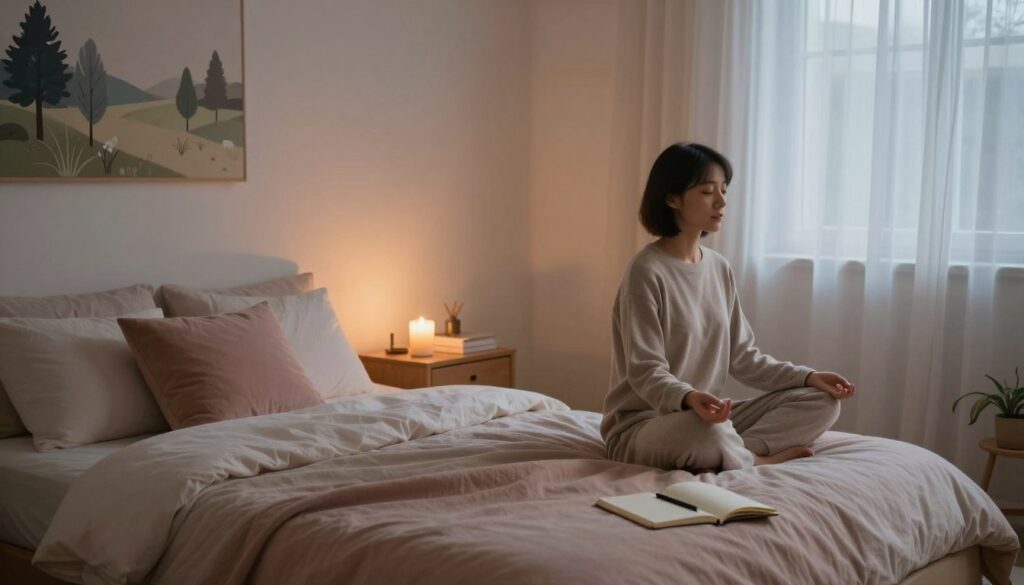
Deep Breathing and Progressive Muscle Relaxation
Slow, controlled breathing sends direct messages to the brain that it’s safe to relax. This process lowers heart rate and reduces cortisol, the stress hormone that interferes with falling asleep. A simple technique involves inhaling for four counts, holding for seven, and exhaling for eight.
Progressive Muscle Relaxation (PMR) systematically tenses and releases muscle groups. Starting with the feet and moving upward, this practice helps identify hidden tension. The contrast between tension and release teaches the body mind connection what true relaxation feels like.
Your Guide to Light Stretching or Yoga
Gentle exercise like light stretching or restorative yoga can prepare the body for sleep. These movements should be calming rather than vigorous. Intense activity too close to bed time can increase adrenaline.
Practice these techniques in a chair near your bed for a few minutes. Wait until you feel naturally sleepy before getting into bed. This timing prevents frustration and helps get better quality sleep throughout the night.
Maintaining a Consistent and Personalized Schedule
The body’s circadian rhythm thrives on predictable timing, much like a musician practicing scales daily. This internal clock becomes stronger and more reliable when sleep and wake times remain stable day after day.
Establishing a Steady Sleep and Wake Time
Irregular sleep patterns create a form of biological jetlag. They disrupt hormone release and body temperature changes that need precise timing. Consistent practice helps the brain anticipate sleep at the right time.
Think of it as athletic training for your internal systems. The more consistent the schedule, the stronger the signals become. This makes falling asleep easier and improves sleep quality throughout the night.
Set a reminder for when to begin evening activities. Choose a realistic wake time that works every morning. Even weekends matter for maintaining this rhythm.
The specific activities can be personalized based on available time and daily needs. This flexibility makes the practice sustainable while still providing the benefits of consistency.
Over time, this approach helps people get better sleep and more vivid dream experiences. It becomes a natural part of daily life that supports overall well-being.
Conclusion
Building better sleep habits starts with finding what works for you personally. The journey to improved rest doesn’t require following every single tip perfectly. Instead, it’s about creating a practice that fits your life and schedule.
Start with just one or two changes that feel manageable. Maybe dim the lights an hour before bedtime or put away your phone. Consistency matters more than perfection when establishing a new routine.
These small steps can lead to significant improvements in sleep quality. A good night of rest helps people fall asleep more easily and wake up refreshed. The benefits extend beyond just feeling rested.
Remember that this is a personal journey. What works for one person might not work for another. The key is to begin with what feels right and build from there.