

Welcome to your complete guide on using auditory tools to explore the fascinating world of conscious sleep. Many people are curious about gaining awareness and control within their dreams. This guide will walk you through the science and practical steps to make it happen.
This method sits at a unique crossroads of neuroscience and sleep technology. It involves playing two slightly different sound frequencies, one in each ear. The brain perceives a third, rhythmic tone, which can gently guide its electrical activity.
This process, known as entrainment, can help shift your mind into states ideal for vivid and conscious dream experiences. Understanding the right frequencies and when to use them is key to success. We will cover all of this, providing a solid technical foundation for your practice.
The appeal of this skill is broad. It offers a space for creativity, problem-solving, and even therapeutic benefits like reducing anxiety. With the right knowledge, you can start using these techniques effectively tonight.
Key Takeaways
- Auditory stimulation can influence brain wave patterns to support conscious awareness during sleep.
- Success depends on understanding the relationship between sound frequencies and different states of consciousness.
- Timing the use of these tools to align with REM sleep cycles is crucial for effectiveness.
- Stereo headphones are essential for delivering the specific audio effect required.
- This technique can be combined with other proven methods to enhance the likelihood of a lucid dream.
- The practice offers potential benefits beyond dream control, including relaxation and creative exploration.
Understanding Binaural Beats and Their Impact on Sleep
The journey into conscious sleep begins with decoding the brain’s natural rhythms and how sound can guide them. This technology creates an auditory illusion that directly influences your mental state.
When your ears receive two slightly different tones through stereo headphones, your brain perceives a third rhythm. This phantom pulse represents the mathematical difference between the original frequencies.
Brainwave States and the Role of Theta and Delta
Your brain operates at various frequencies throughout the day and night. These electrical patterns correspond to different states of consciousness.
| Brainwave State | Frequency Range | Associated Mental State |
|---|---|---|
| Gamma | 40 Hz+ | High focus and alertness |
| Beta | 12-40 Hz | Normal waking activities |
| Alpha | 6-14 Hz | Relaxed wakefulness |
| Theta | 4-8 Hz | Dreaming and light sleep |
| Delta | 0.5-4 Hz | Deep, restorative sleep |
Theta frequencies are particularly important for sleep exploration. They create the bridge between waking awareness and dream states where consciousness can be maintained.
Enhancing Sleep Quality with Stereo Headphones
Proper equipment is essential for this technology to work effectively. Regular speakers cannot deliver the isolated tones required for the brain to create the internal rhythm.
Sustained exposure to these auditory patterns creates neural synchronization across multiple brain regions. This auditory steady state response helps large sections of the brain operate at the same frequency.
Understanding these mechanisms provides the foundation for selecting appropriate frequencies. This knowledge helps create optimal conditions for quality rest and conscious sleep experiences.
Exploring “binaural beats lucid dreaming” Techniques
Moving from theory to practice, this section details how targeted audio can cultivate the unique mental state needed for conscious sleep.
How Auditory Entrainment Elevates Lucid Dreaming
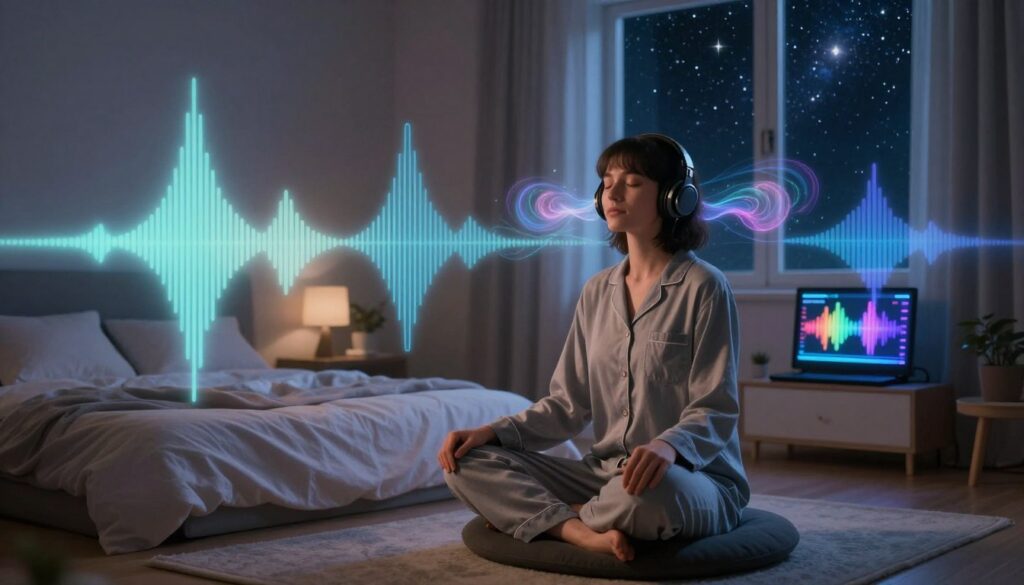
Auditory entrainment works by gently guiding the mind into specific brainwave states. Using sounds designed for Theta frequencies helps a person reach the transitional phase between wakefulness and sleep.
The goal is not just to fall asleep quickly. It is to maintain a delicate balance. The body relaxes deeply, but enough mental awareness stays active to recognize the dream state.
This process stabilizes the hypnagogic state, where vivid imagery emerges. It allows for a conscious transition directly into a dream, a technique known as Wake Initiated Lucid Dream (WILD).
People can use these sounds all night or strategically after waking up. This timing aligns with longer REM cycles, making conscious dreams more likely.
Combining this audio tool with other methods, like setting intentions before bed (MILD), creates a powerful synergy. Specific melodies can also act as psychological anchors, signaling to the mind that it’s time to become aware.
Optimal Frequencies and Timing for Lucid Dreaming Induction
Mastering conscious dream induction involves more than just playing sounds—it requires understanding the optimal brainwave patterns and when to target them. The right combination of frequency selection and timing can significantly enhance success rates.
Selecting Theta-Driven Frequencies for Lucidity
The Theta range (4-8 Hz) represents the gold standard for conscious dream work. This frequency band naturally occurs during light sleep and the dreaming process itself.
When the brain enters this state through auditory entrainment, it creates ideal conditions for maintaining awareness. Some practitioners find benefit from combining Theta with adjacent frequencies for customized effects.

Scheduling Binaural Beats During REM Cycles
Timing is equally crucial for effective induction. REM sleep cycles occur approximately every 90-120 minutes throughout the night.
The later cycles, typically in the early morning hours, offer the longest and most frequent dream periods. Strategic use during these windows maximizes opportunities for conscious experiences.
Many successful practitioners use these sounds after brief awakenings when the mind is primed to re-enter REM sleep with heightened awareness.
Technical Insights: Brainwaves, Entrainment, and Evidence-Based Practices
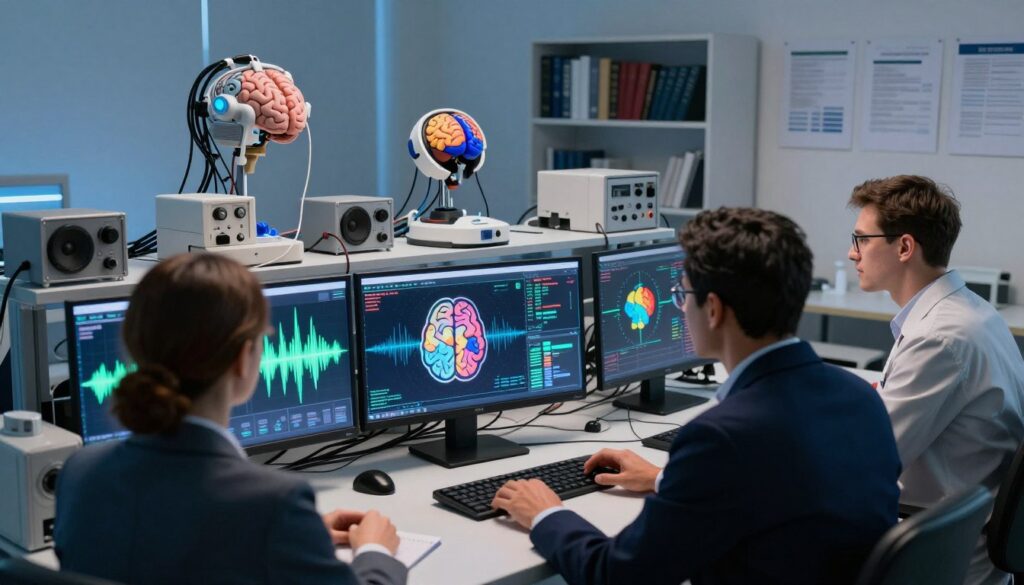
Delving deeper into the science reveals the fascinating mechanisms that make auditory brainwave entrainment possible. The auditory steady state response (ASSR) creates widespread neural synchronization where different brain regions begin operating at the same frequency.
Neurophysiological Mechanisms Behind Binaural Beats
This synchronization state is associated with enhanced self-awareness and deep meditative states. Research connects these patterns to the meta-cognitive ability required for conscious dream experiences.
A landmark 1998 study in Physiology and Behavior demonstrated significant effects. Participants exposed to Delta-Theta frequencies showed improved cognitive performance and mood.
Insights from Lucid Dreaming Research Studies
While no direct evidence proves these sounds specifically cause conscious dreams, the indirect mechanisms are compelling. The technology improves attention and awareness during relaxation.
This creates favorable conditions for dream consciousness even if it doesn’t guarantee results. Individual responses vary based on neurological differences and practice consistency.
Integrating Binaural Beats with Other Dream Techniques
Combining auditory tools with proven methods creates the most effective approach. A comprehensive practice yields better results than any single technique alone.
| Integration Method | Primary Benefit | Implementation Tip |
|---|---|---|
| Dream Journaling | Builds recall and pattern recognition | Record entries immediately upon waking |
| Reality Checks | Trains mind to question reality | Perform 5-10 times daily with intention |
| Timed Listening | Aligns with natural sleep cycles | Use during WBTB after 4-6 hours of sleep |
| Psychological Anchoring | Creates dream triggers | Pair specific sounds with reality checks |
Important safety considerations include consulting healthcare providers for those with medical conditions. Never use these tools during activities requiring full attention like driving.
Keep volume low to avoid sleep disruption. Be patient as effects may not be immediate, and discontinue use if experiencing anxiety or disturbing content.
Conclusion
The path to achieving awareness during sleep requires integrating multiple approaches. This method works by gently guiding the brain into specific wave states using carefully selected audio frequencies.
Remember that developing this unique ability takes patience and experimentation. What works for one person may need adjustment for another. Keep a dream journal nearby to track your progress.
Start your journey tonight with comfortable headphones and Theta-frequency music. Approach the practice with curiosity rather than pressure. Consistent effort will help you explore the fascinating world of conscious dreams.