

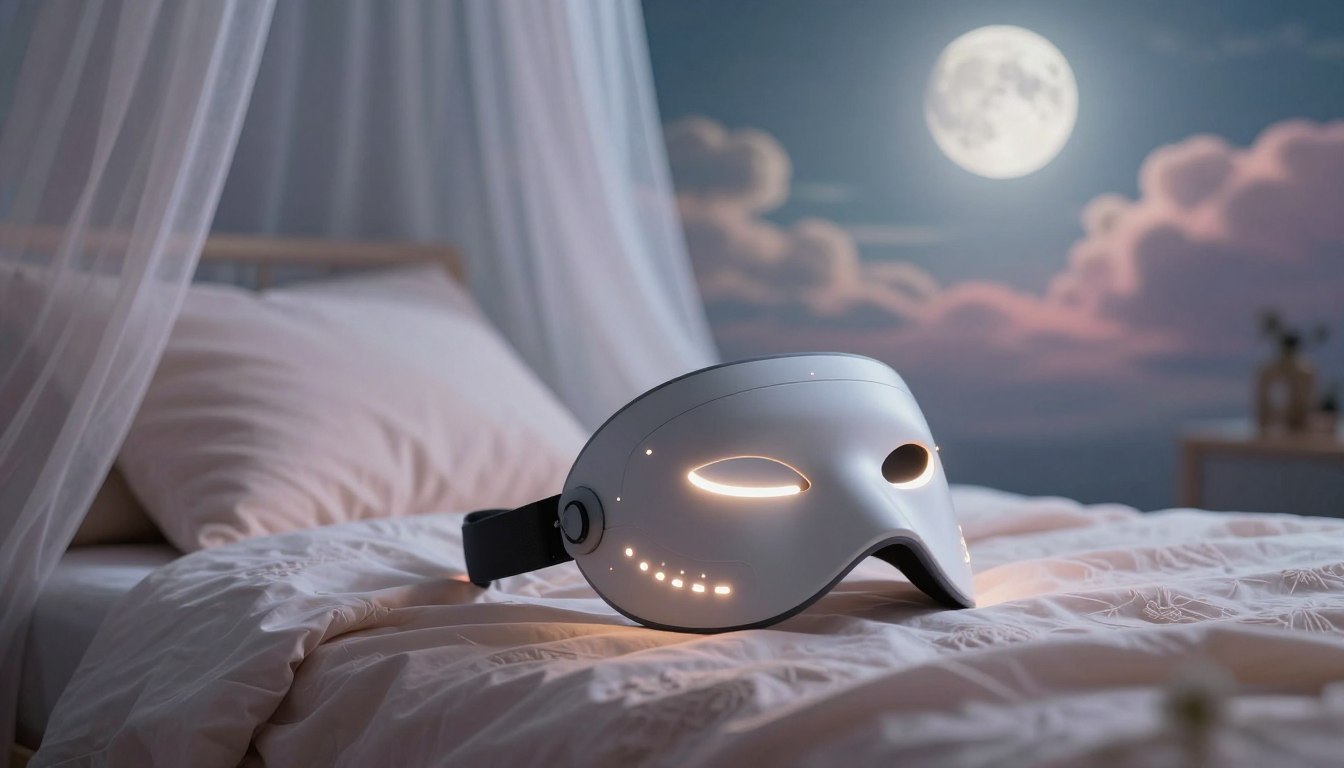
Have you ever wondered if it’s possible to become aware that you’re dreaming while still asleep? Specialized sleep devices aim to make this remarkable experience more accessible. These innovative tools use gentle light cues to help users recognize they’re in a dream state.
The technology behind these devices has evolved significantly. Embedded LED lights flash during REM sleep, designed to be visible through closed eyelids without waking the sleeper. With proper preparation, users can learn to recognize these light patterns as dream signs.
Current market options range from budget-friendly timer-based models to sophisticated sensor-driven devices. Prices vary from around $100 to over $600, with features like REM detection and two-way communication. This comparison explores whether these innovative sleep tools deliver on their promises.
Key Takeaways
- Light-cue sleep devices use LED technology to help users achieve awareness during dreams
- Different models employ either simple timers or advanced REM sleep detection
- Price points range significantly from budget options to premium devices
- Proper user preparation and intention are crucial for success
- Comfort and wearability vary across different brands and models
- Scientific validation differs among available products on the market
Introduction to Lucid Dreaming Masks and Their Promise
What if your nightly dreams could become interactive adventures where you’re fully conscious? This remarkable state of awareness during sleep opens incredible possibilities for creativity and self-discovery. People have pursued this experience for centuries through various techniques.
Overview of Lucid Dreaming Concepts
This unique consciousness phenomenon occurs when someone realizes they’re in a dream while still asleep. This awareness allows individuals to potentially guide their dream narrative and explore their subconscious mind.
The benefits extend beyond mere entertainment. Practitioners report enhanced problem-solving skills and personal growth opportunities. Traditional methods require significant training in reality checks and dream journaling.
How Light-Cue Sleep Masks Ignite Lucidity
These innovative devices aim to simplify the process through technological assistance. Embedded LEDs emit gentle light patterns during REM sleep when vivid dreams occur most frequently.
The technical principle involves careful calibration. Lights must be strong enough to penetrate closed eyelids yet subtle enough to avoid waking the user. This creates reliable dream signs that can trigger awareness.
With proper intention setting before sleep, these external cues help users recognize they’re dreaming. The promise lies in providing consistent, bizarre stimuli that stand out within the dreamscape. This approach potentially accelerates the learning curve for beginners.
How Light-Cue Sleep Masks Work
Understanding the mechanics of light-cue technology requires diving into sleep architecture and brain activity patterns. These devices operate by delivering precisely timed stimuli during specific sleep phases.
Decoding LED Light and Sound Cues
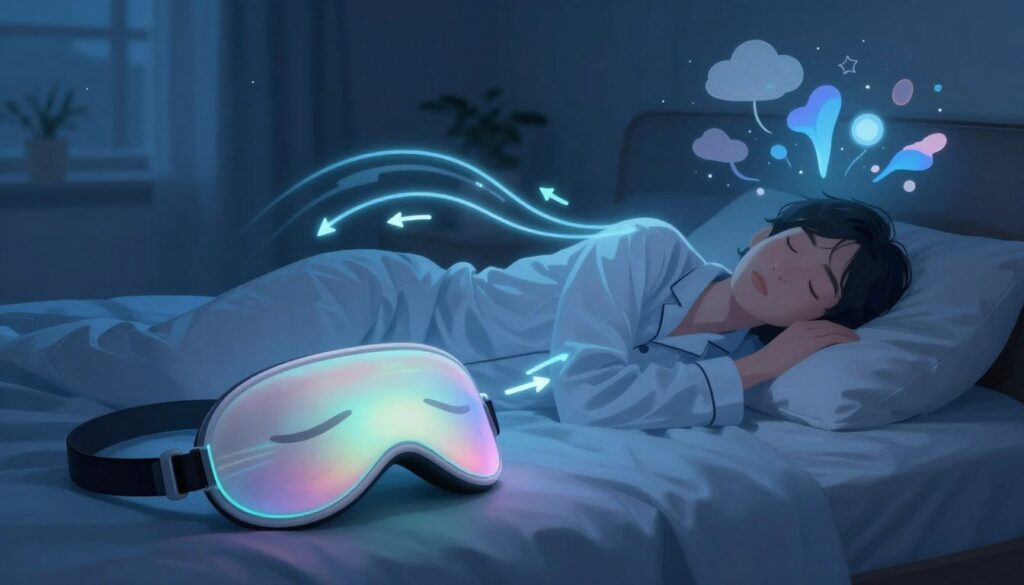
The technology uses carefully calibrated LED lights that emit gentle patterns. These light cues must penetrate closed eyelids without causing awakening. The visual cortex remains active during REM sleep, allowing external light sources to appear within dreams.
Some advanced models incorporate sound features for enhanced effectiveness. Recorded messages can play during detected dreaming periods. This auditory stimulation helps modulate brain activity and influence dream content.
Understanding Sleep Stages and REM Activation
Sleep progresses through distinct stages in 90-120 minute cycles. The body moves from light sleep to deep restorative phases. Rapid eye movement periods typically occur later in the night.
During REM sleep, the brain shows heightened activity similar to wakefulness. This is when most vivid dreaming occurs. Advanced devices use sensors to detect eye movement patterns characteristic of this phase.
The technical challenge involves delivering stimuli at precisely the right moment. Cues must occur during established REM sleep rather than deeper sleep stages. Proper timing ensures the stimuli integrate naturally into the dream experience.
Design, Comfort, and Usability Considerations
The physical design of these eye-worn devices presents unique challenges for nighttime wear. Comfort becomes the deciding factor for consistent use, as even sophisticated technology fails if users remove it unconsciously.
Ergonomic Materials and Lightweight Construction
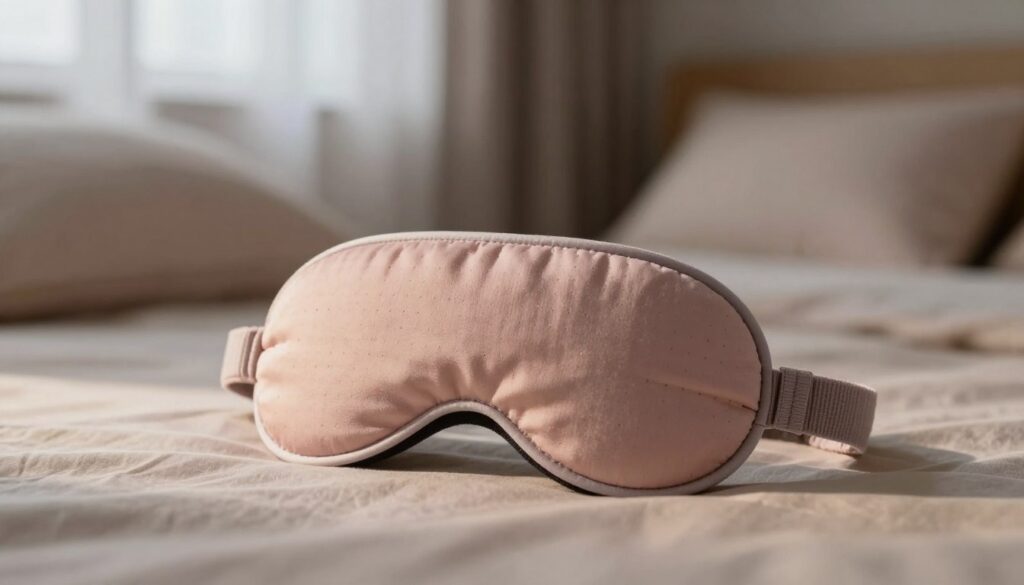
Weight distribution makes a significant difference in user experience. Some models use heavy AA batteries that create facial pressure, while others employ tiny coin cells for better balance.
Advanced designs feature breathable fabrics and adjustable straps. These elements prevent overheating and maintain proper positioning throughout the night.
Practical Challenges in Wearing a Sleep Mask
Most users need an adaptation period of 3-7 nights. During this time, the device may feel intrusive, and some people remove it while asleep.
Younger individuals often adjust more quickly, especially if they already use sleep technology. Side sleepers face additional challenges with pressure and alignment.
The best designs offer washable components and intuitive controls. These features enhance long-term usability and maintenance.
Lucid Dreaming Mask Technology: Timer-Based vs. Actigraphy Approaches
Sleep technology for dream awareness operates on two fundamentally different principles that determine effectiveness and user experience. The core distinction separates basic timing mechanisms from advanced biological detection systems.
Timer-Based Light Sequences Explained
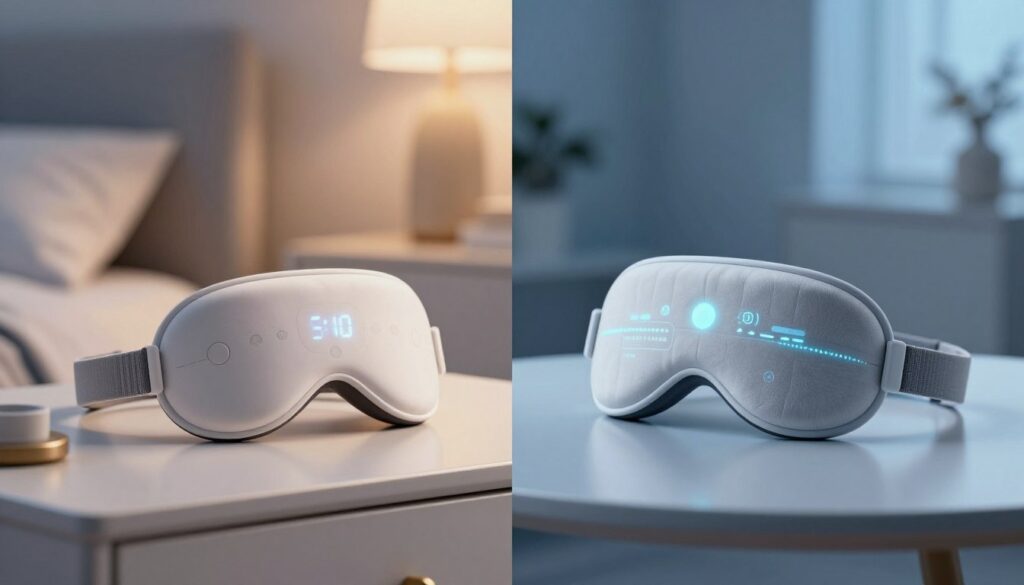
Simple timer-based devices like Remee use predetermined schedules. They typically begin flashing approximately 5 hours after activation, then continue every 15 minutes.
This approach assumes users enter REM sleep during the second half of the night. However, it risks delivering cues during non-dreaming sleep stages or brief awakenings.
Sensor-Driven Techniques and Eye Movement Tracking
Advanced systems employ actigraphy to detect actual dreaming periods. They monitor eye movements and subtle physiological indicators characteristic of REM sleep.
The NovaDreamer uses proprietary algorithms from Stanford University research. These sophisticated systems distinguish rapid eye movements from waking patterns.
Some advanced masks feature two-way communication. Users can signal the device to stop cues once awareness is achieved.
Cost, Value, and Market Comparisons
The financial investment required for dream awareness devices spans a surprisingly wide range, reflecting fundamental technological distinctions. Consumers face choices from budget-friendly entry points to premium systems with advanced capabilities.
Pricing Differentials and Affordability Analysis
Remee stands as the most accessible option at approximately $100. This device uses simple timer-based technology rather than sophisticated sleep stage detection.
Mid-range choices like the REM-Dreamer cost around $185. These offer actigraphy-based REM detection for more precise cue timing during actual dreaming periods.
| Model | Price | Technology | Key Features |
|---|---|---|---|
| Remee | $100 | Timer-based | Basic light patterns, affordability |
| REM-Dreamer | $185 | Actigraphy | REM detection, optional speaker |
| NovaDreamer | $200-$600 | Advanced sensors | Research-backed, educational bundles |
| LucidMe | $199.99 | Modern connectivity | App integration, Bluetooth |
Competitive Edge of Various Models
Premium devices like NovaDreamer command higher prices but include comprehensive learning resources. The newer LucidMe offers modern features but has limited availability until 2026.
Value assessment extends beyond initial cost. Effectiveness probability matters greatly for serious practitioners seeking consistent results.
Budget-conscious beginners might start with affordable options to gauge interest. However, they should understand the technological trade-offs between price tiers.
Extra Features and Validation from Research
Premium devices now offer interactive capabilities that bridge the gap between dreaming and waking consciousness. These advanced features address common user frustrations while integrating established practices directly into the technology.
Innovative Add-Ons and Two-Way Communication
The NovaDreamer includes a clever reality check button that users press upon waking. This trains the habit of testing whether mechanical devices function properly—a technique that often carries over into dreams where technology behaves unpredictably.
Some models feature two-way communication systems. Once awareness is achieved, users can signal the device to stop cues using distinctive eye movements. This prevents continued stimulation from disrupting the experience.
Peer-Reviewed Studies and Scientific Backing
The primary validation comes from Stephen LaBerge’s 1995 study published in Dreaming, the American Psychological Association journal. His research compared working devices against identical non-functional versions.
“Cueing with sensory stimuli by the DreamLight appears to increase a subject’s probability of having lucid dreams, and that most of the resulting lucid dreams are due to the specific effect of light cues rather than general ‘placebo’ factors.”
Functional units more than doubled dream frequency compared to controls. However, no independent replication exists, and LaBerge had commercial interests in the products tested.
Broader sleep science supports the general use of these tools. Blocking external light promotes deeper, more restorative sleep stages. This enhancement of overall sleep quality creates better conditions for vivid dream recall and memory consolidation.
Individual results vary significantly based on commitment to complementary practices and natural dream recall ability. The technology works best when integrated into a comprehensive approach to sleep optimization.
Conclusion
The journey toward conscious dreaming requires careful consideration of available technological aids. Research confirms that properly designed devices with REM-detection capabilities can significantly increase lucid dream frequency beyond placebo effects.
However, effectiveness varies dramatically based on technological approach. Timer-based options offer affordability but risk disrupting sleep quality during non-dreaming stages. Sensor-equipped models provide higher success probability at premium prices.
No device functions as a magic solution. These tools work best as supplements to established practices like reality testing and dream journaling. Consistent results require dedicated practice over time.
For serious enthusiasts, research-backed premium models offer better long-term value. Patient consumers might benefit from monitoring market developments before purchasing next-generation devices.