

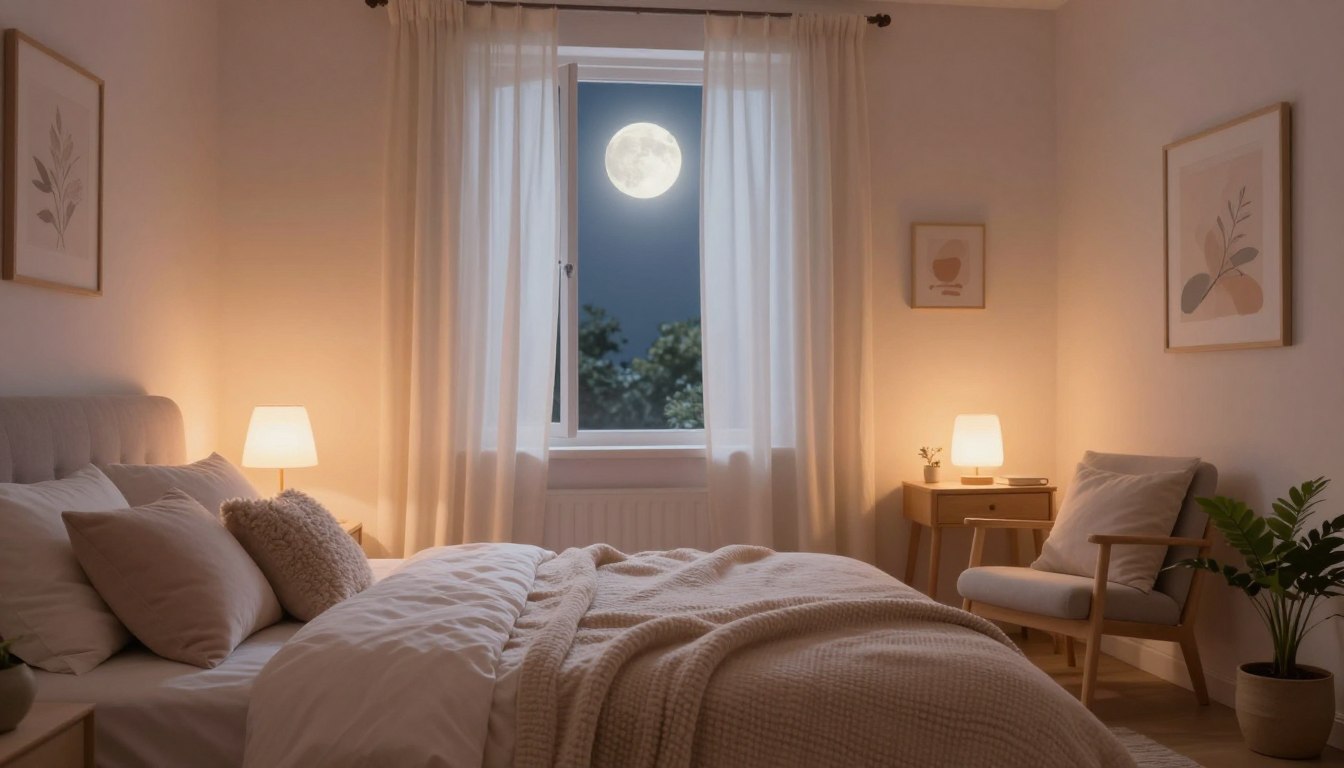
Can a few precise tweaks to temperature, fabric, light, and sound really change how you feel the next day?
You’ll get a technical, practical guide that ties thermoregulation and tactile factors to objective measures of sleep and next-day alertness.
Start with measurable targets: ambient ranges that help your core cool down, lux limits for evening lighting, and noise strategies that protect slow-wave cycles.
We’ll show how adjusting one bedroom input often needs small changes to others so you preserve continuity and depth. Expect evidence-based tips, from washing cadence to white-noise masking and scent cues, that are budget-aware and scalable.
By the end, you’ll have clear parameters to test this week and simple ways to track gains in sleep quality and daytime functioning—so you can aim for a reliably good night and better mental health.
Key Takeaways
- Temperature and tactile choices strongly influence sleep continuity and depth.
- Limit evening light to low lux and use noise masking for fewer awakenings.
- Practical targets let you make data-backed changes tonight.
- Small changes to bedding and airflow can reduce pain and improve rest.
- Cleanliness and calming cues support better mental health at bedtime.
Start Here: Assess Your Current Sleep Environment and Goals
Start by measuring what’s already in your room so you can make changes that actually move the needle. Use a thermometer and hygrometer to log 24-hour temperature and relative humidity. Track evening lux at eye level and peak decibel readings during your typical bed time.
Run a seven-day log noting time-of-night awakenings and perceived quality each morning. Inventory your bed: mattress age, pillows, sheets, and blankets. If your mattress is >7–8 years or you wake achy, mark it for evaluation.
- Document baseline: 24-hr temp/humidity, evening lux, peak noise, and awakenings over 7 days.
- Spot hotspots: west-facing windows, thin walls by traffic, vents near the bed, and light leaks.
- Map constraints: budget, rental rules, shift work, caregiving—match solutions to your schedule.
- Set clear goals: e.g., sleep onset
Note individual factors: allergies, bed partner needs, and pets will change your priorities for air quality, textiles, and support. Pick two first interventions with high impact and low effort (blackout + fan, for example), then keep a simple log to track response over time.
Quick nightly checklist: curtains closed, devices off or muted, thermostat set. Make this routine so adherence is easy even on busy work days.
Dialing In Bedroom Temperature for Better Sleep
Controlling overnight temperatures helps your body drop core heat and start the night phase faster.
The science of thermoregulation
Your body lowers core temperature at night; that decline triggers melatonin release and signals readiness. A cooler ambient air raises the core-to-skin gradient so you lose heat faster and fall asleep sooner.
Practical nighttime targets
Aim for about 65°F (18.3°C) as a practical default. Test anywhere between 60–67°F to find your best setting and track sleep onset and awakenings for several nights.
Seasonal tactics and tools
In cold months, layer breathable bedding (percale or linen, light blanket, then duvet). Warm feet with socks or a hot water bottle rather than overheating the core.
In heat, block daytime solar gain, ventilate at night, use a fan or AC, and try chilled socks or a tray of ice in front of a fan. For couples with different needs, dual-zone bed climate systems (e.g., BedJet) let each person pick comfort without changing the whole room.
“Small adjustments—±1–2°F—often make the biggest difference in how quickly you fall asleep.”
| Situation | Recommended setting | Quick tool |
|---|---|---|
| Typical night | 65°F (18.3°C) | Programmable thermostat + thermometer |
| Hot weather | 60–67°F target effort | Fan + window ventilation + ice tray |
| Cold weather | Layer bedding, warm extremities | Hot water bottle, bed socks, zoned HVAC |
- Measure: place a thermometer at pillow height and log temps at bedtime, 2 a.m., and wake time.
- Placement: keep the bed away from vents and direct sunlight to reduce drafts and spikes.
Texture That Touches Your Sleep: Mattress, Pillows, and Bedding
Your bed’s materials set the stage for alignment, pressure relief, and nightly recovery. Think of firmness as surface feel and support as the underlying structure that keeps your spine neutral.

Match support to your body and position
Start with a medium-firm mattress as a baseline. Lighter or heavier bodies may need softer or firmer cores to keep hips and shoulders aligned.
Test pressure with a simple check: lie on your side and note shoulder contact and hip sink. Even contact without numbness means good pressure mapping.
Pillows by position and loft
Side sleepers need higher loft and firmer edges to fill the neck-shoulder gap. Back sleepers use medium loft for neutral neck angle. Stomach sleepers benefit from thin or no pillow.
Sheets, weaves, and replacement timelines
Percale and linen breathe; sateen feels warmer. Replace mattresses around 7–8 years and most pillows every 2–3 years to keep support and hygiene intact.
“Match layers intentionally: protector, crisp sheet, light blanket, then duvet.”
Light Management: Protect Your Circadian Rhythm at Night, Harness Natural Light by Day
Managing household light from dusk to dawn gives you a simple, high-impact lever to protect circadian timing.
Lux thresholds and spectral sensitivity
Keep evening illumination at eye level below ~10 lux to protect melatonin release and reduce night sleep fragmentation. Short-wavelength (blue) light is especially potent; the retina is most sensitive between ~460–480 nm and will shift circadian timing even at low lux.
Cutting blue light from electronic devices
Behavior beats settings: turn off electronic devices at least one hour before bedtime for the largest effect. If you must use screens, enable warm color filters, lower brightness to minimum, and wear blue-blocking glasses.
Blackout and dimming solutions
Close blackout curtains or blinds before sunset if you face streetlamps. Cover LED indicators on chargers and clocks and use low-wattage, warm lamps or a dimmer for pre-bed reading.
“Use red-amber nightlights for brief trips; they disturb melatonin far less than white or blue bulbs.”
- Replace overhead downlights with lamps positioned below eye height to keep eye-level lux low.
- Test for leaks: sit in darkness for two minutes and scan for glow sources; add door sweeps or light-blocking tape where needed.
- In the morning, get natural light exposure within 30–60 minutes of waking for 10–30 minutes to anchor your circadian rhythm and boost daytime alertness.
Practical routine
Consistent evening dimming and morning brightening act as daily time cues. Align lights with your schedule: dim an hour before bedtime and open curtains promptly on waking to strengthen your body clock.
Quiet the Room: Practical Noise Control for a Restful Night
A steady, low baseline of background sound helps your brain ignore abrupt interruptions and preserves deep rest.
Masking vs. muting: masking supplies broadband sound (white noise, fan, or a SNOOZ unit) to cover random spikes. Muting or attenuating cuts transmission at the source with seals, glazing, and soft materials.
Targets and technical checks
Aim for a steady level under ~35–40 dB at pillow height. Fluctuations matter more than a single peak: a constant 38 dB is less disruptive than spikes to 55 dB.
Layered interventions
- Soft fixes: add a plush rug, upholstered headboard, and heavy lined curtains to absorb mid and high frequencies.
- Sealing: door sweeps, weatherstripping, and outlet gaskets reduce leaks that let outside sounds through.
- Window upgrades: double glazing or removable window inserts cut low-frequency street noise for a major drop in transmission.
- Personal protection: foam or silicone earplugs add 20–35 dB attenuation; pair them with white noise for comfort and safety.
“Keep a simple logger at pillow height for a week to find problem hours and measure improvements.”
Use slow-tempo ambient music while winding down, but set a timer so it fades after you fall asleep. Reposition the bed off shared walls when possible and keep a fan or white-noise device running to smooth out irregular sounds.
Quick test: record decibel levels at bedtime, 2 a.m., and wake time with a smartphone app. Tweak layers and retest until the night signal is steady and low.
Sleep Hygiene Meets Environment: Declutter, Air Quality, and Cleanliness
A tidy, well-ventilated bedroom lowers nightly stress and helps your mind shift toward rest. Clear surfaces to remove visual reminders of tasks that trigger rumination. Make the room feel like a sanctuary, not an office or gym.

Decluttered sanctuary: Reducing anxiety triggers at bedtime
Visual clutter raises cortisol and keeps your brain alert. Move paperwork, workout gear, and monitors out of sight. Use closed bins and under-bed drawers to hide items and cut dust build-up.
Dust mites and linens: Washing cadence and care to boost health and comfort
Laundry cadence: wash sheets every 1–2 weeks; weekly if you sweat or share the bed with pets. Replace pillowcases weekly to cut facial oils and allergens.
- Wash bedding in hot water per care tags when possible; follow manufacturer instructions to avoid damage.
- Vacuum under the bed and rugs weekly; launder duvet covers and mattress protectors monthly.
- Consider allergen-proof encasements and a HEPA purifier if you have sensitivities.
- Power down electronics, cover tiny standby LEDs, and keep a 10-minute evening tidy routine to prep your nightstand.
“Clean surfaces and fresh air create reliable cues that help your body and mind ready for rest.”
Your Sleep Environment: Device Discipline and Bedtime Routine
A clear tech cutoff and a short wind-down sequence reduce cognitive load and prime your body for nighttime physiology.
Set a device curfew 60 minutes before your planned bedtime to limit blue light exposure and mental activation. Charge phones outside the room and use app blockers or scheduled Do Not Disturb to prevent late work interruptions.
Digital detox
Blue light from screens delays melatonin and shifts circadian rhythm. Turning off electronic devices an hour before lights-out supports melatonin onset and lowers sympathetic tone.
Wind-down practices
Sequence your routine: dim warm lights, 5–10 minutes of gentle stretches, then 4-7-8 or box breathing for 2–4 minutes. A warm shower 60–90 minutes before bedtime can speed peripheral heat loss and cue melatonin release.
- Lighting: use lamps below eye level and warm bulbs; avoid overhead switches.
- Music: choose slow instrumental tracks and set a 30–45 minute timer.
- Scent: a small lavender cue can create a learned relaxation response over weeks.
- Prep: finish work earlier and use a bedside notepad to offload thoughts.
“Protect the first and last 60 minutes of your day as tech-light zones to stabilize circadian timing.”
| Action | Clock time | Physiological effect |
|---|---|---|
| Device curfew | -60 minutes | Reduces blue light; lowers arousal |
| Gentle movement + breathing | -45 to -30 minutes | Activates parasympathetic nervous system |
| Warm shower | -90 to -60 minutes | Promotes peripheral cooling; aids melatonin onset |
| Morning natural light | Within 30–60 minutes of wake | Anchors circadian rhythm; boosts daytime alertness |
Advanced Personalization: Tune Temperature, Texture, Light, and Sound to Your Body
A/B testing one microclimate variable at a time helps you find what your body needs for consistent rest and daytime comfort.
Profile first. Log when you overheat, feel chilled, notice pressure points, or wake to small noises or light. Note weekdays, weekends, and seasonal shifts to spot repeat patterns.
Hot vs. cold sleepers: microclimate and partner options
For couples, split the bed rather than the thermostat. Try separate duvets, different blanket weights, or a dual-zone climate system so each person controls their side.
Quick test: run one side at -1 to -2°F from the other and track continuity and morning comfort for 3–4 nights.
Sensitivity mapping: log light, sounds, and texture over time
Create a simple weekly A/B plan: change a single variable—pillow loft, mattress topper, or room light level—and compare results after 3 nights. Use earplugs, white noise, or heavier curtains for sound-sensitive people.
- Adjust pillow loft and firmness based on position changes night-to-night.
- Swap a breathable topper to alter surface contour and support quickly.
- Choose percale if you run hot; flannel or sateen if you run cold.
“Small, repeatable tests beat big overhauls—track one change for several nights before you decide.”
| Test | Change | Duration | Measure |
|---|---|---|---|
| Temperature | ±1–2°F or split zones | 3–4 nights | Night continuity, wake time comfort |
| Bedding | Topper or blanket weight swap | 3 nights | Pressure points, thermal comfort |
| Light & Noise | Masking vs. blackout vs. mask | 1 week | Awakenings, perceived quality |
| Pillows | Loft/firmness change | 4 nights | Neck support, morning pain |
Include day factors: exercise timing, alcohol, and late meals can alter thermal load and arousal. Reassess quarterly as training, stress, or travel change your needs.
Conclusion
In short: use numeric guideposts—about 65°F (test 60–67°F), evening light under ~10 lux, and steady, low sound—to make your bedroom predictable and easier to tune for a good night.
Change one input at a time, observe for 3–7 nights, and keep what helps you fall asleep faster and wake more restored. Pair layered fixes: blackout curtains plus low lamps, white-noise masking with soft furnishings, and breathable bedding with the right mattress and pillow support for your body.
Keep hygiene and routines: wash sheets weekly–biweekly, refresh pillows and mattresses on schedule, remove devices from the room, and maintain a short wind-down. Log results and revisit seasonally so small, measured tweaks translate into lasting quality and health.